
Balance Exercises and Fall Prevention in Older Adults
Fzt. Kemran Hafız · 2 August 2026 · 2 min read · Last updated:
Fzt. Kemran Hafız · 2 August 2026 · 2 min read · Last updated:
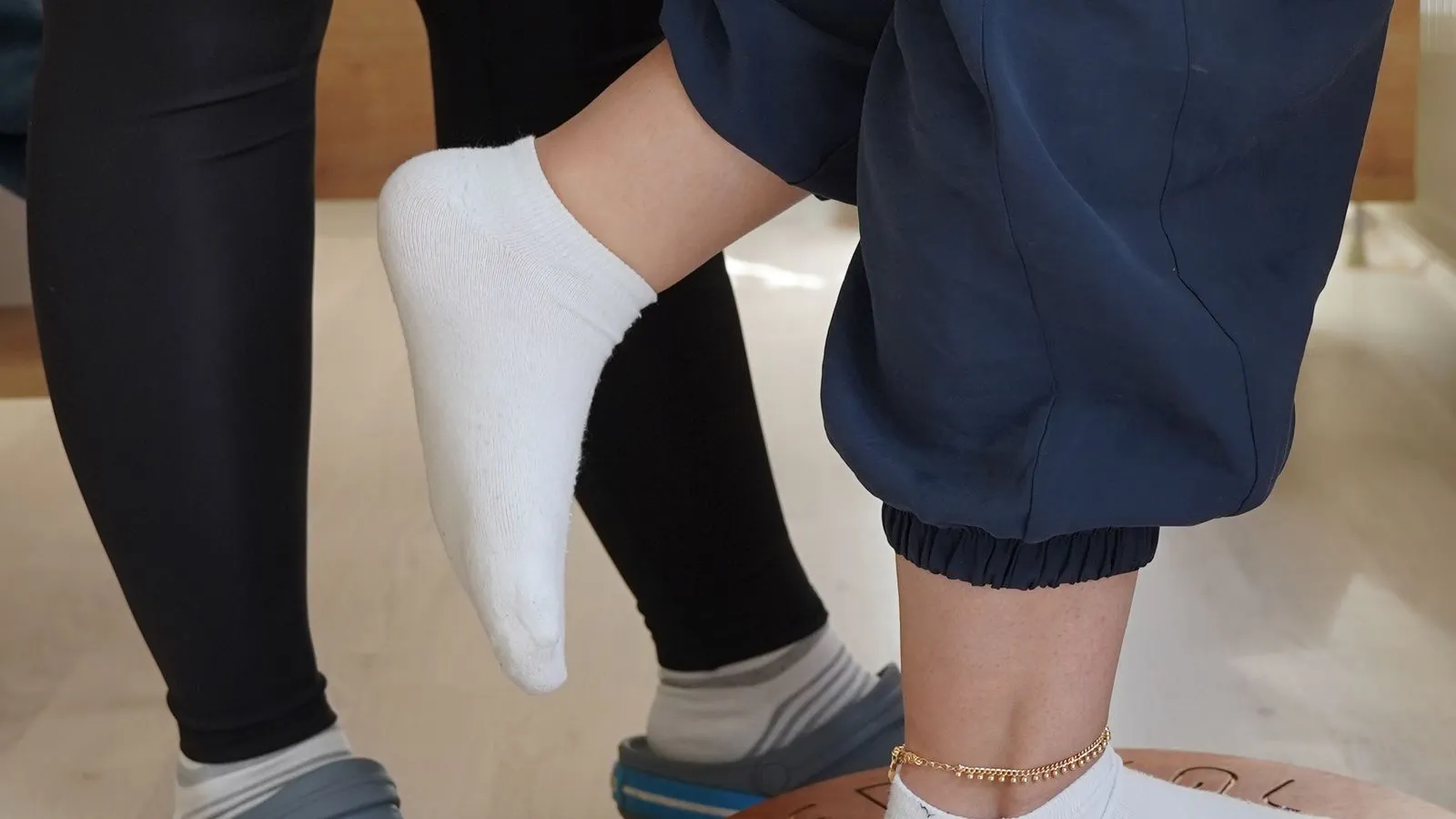
In later life a fall causes far more than a fracture. The good news: fall risk can be measured and meaningfully reduced.
One in three people over 65 falls at least once a year. Most of these falls pass without injury, but some lead to a hip fracture, a long spell in bed and a permanent loss of independence.
There is a second consequence that gets less attention: fear of falling. Someone who has fallen once begins to avoid moving, loses muscle, balance deteriorates further and the risk rises. That is how the vicious circle forms.
Balance is not an abstract idea; it is measured. Assessment uses single-leg stance time, timed up-and-go, walking speed and lower limb strength. These both show the risk and allow objective tracking of whether the programme is working.
Strength work. The single most powerful component in reducing risk, particularly the muscles around the hip and knee. Appropriately dosed resistance training builds muscle at any age.
Balance work. A graded sequence: supported standing, feet together, semi-tandem, tandem, single leg. Soft surfaces and eyes-closed work are added at later stages.
Gait training. Turning, walking backwards, stepping over obstacles — the situations actually met in daily life.
Dual-task work. Walking while talking or counting. Most real falls happen in moments when attention is not on a single task.
Getting up from the floor. Being able to get up shortens the time spent on the ground after a fall, and that time directly affects the outcome.
The easiest and fastest-acting part of the programme: removing rugs, fitting grab rails in the bathroom, adding a night light, tidying cables, moving frequently used items to a reachable shelf.
Strength and balance gains become measurable within weeks. The key is continuity: when a programme stops, the gains are lost again within a few months.
Fzt. Kemran Hafız bases balance and fall-risk programmes on measurement, reassessing progress with the same tests at regular intervals.
Read on: When a balance problem has a neurological cause, assessment and programme follow the framework on the neurological rehabilitation page.
Neurological Rehabilitation
Not all physiotherapy is the same. For conditions arising from the nervous system, neurological physiotherapy differs from orthopaedic physiotherapy in aim and method.
9 October 2026 · 2 min read
Neurological Rehabilitation
The most common question: “How long will it take?” The honest answer depends on the condition. The stages of neurological rehabilitation and realistic expectations.
7 October 2026 · 2 min read
Neurological Rehabilitation
In a neurological condition, the right physiotherapist calls for experience and method beyond the general criteria. What to look for when choosing in Nilüfer.
5 October 2026 · 2 min read
A programme aimed at walking, balance and daily independence after stroke, MS, Parkinson's and brain injury.
Graded, measurement-based rehabilitation for joint problems and the period after orthopaedic surgery.
For groin, outer hip and deep buttock pain: assessment that finds the source, then strength-focused work.