
Skip to content
Fzt. Kemran HafızFizyoterapi & Rehabilitasyon

Rehabilitation for Disability and Special Needs

For disabled people and children with special needs, the aim of physiotherapy is not simply to correct a movement but to help the person reach and hold the highest possible level of independence in daily life. Fzt. Kemran Hafız runs this process together with the family and carers, within a long-term plan.

About your physiotherapist

  • 5.0 · 21 Google reviews
  • Physiotherapy and Rehabilitation graduate, Karabük University (2020)
  • Clinical experience at Romatem Physical Therapy and Rehabilitation Hospital and Karabük Training and Research Hospital
  • One-to-one rehabilitation in Bursa Nilüfer since 2021
  • Education and experience
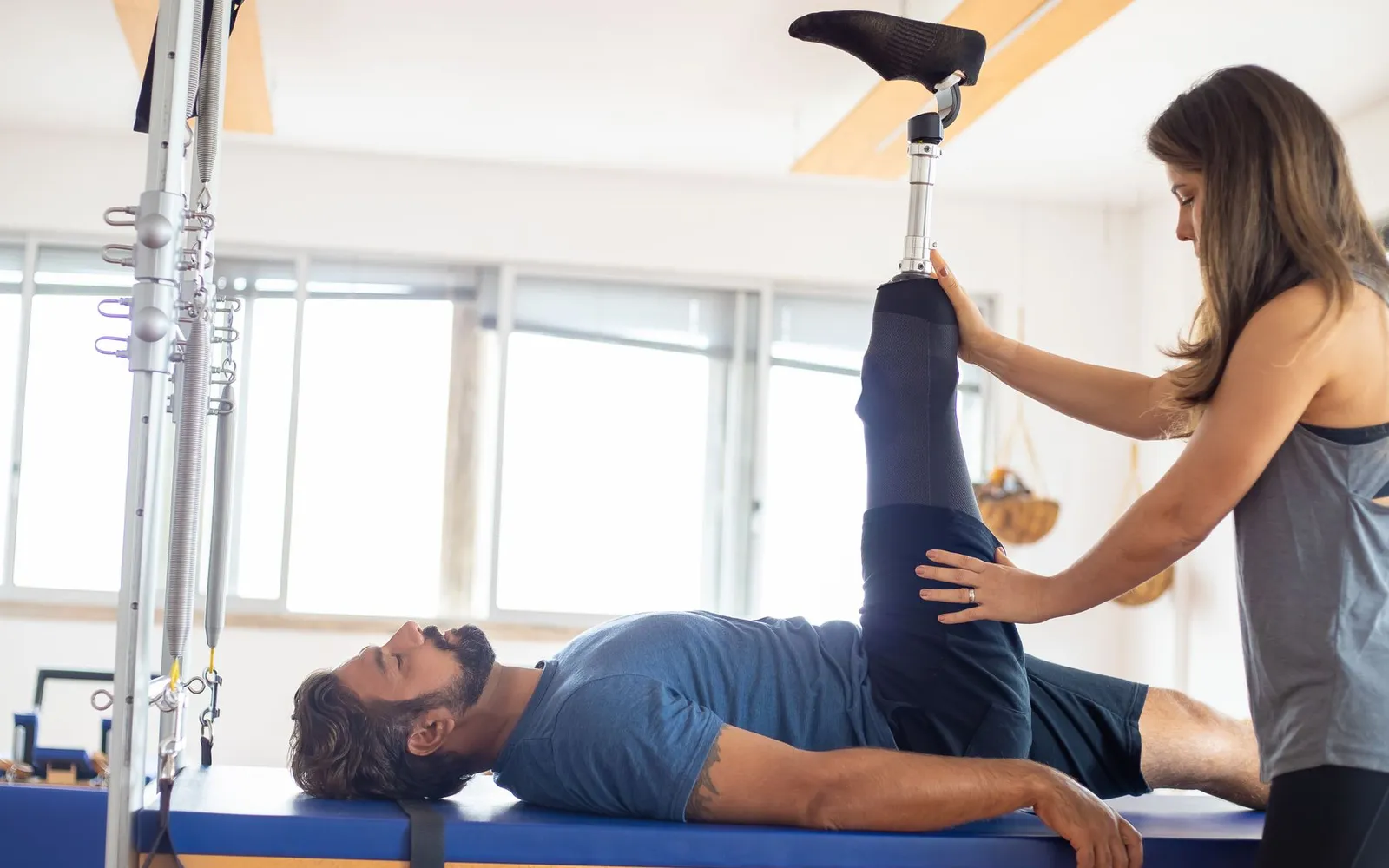
One-to-one rehabilitation with a client using a prosthetic limb

When is it needed?

  • Muscle tone and motor development problems in cerebral palsy
  • Progressive loss of strength in muscle disease
  • Wheelchair and transfer needs after spinal cord injury
  • Difficulty with sitting balance, head control and posture
  • Risk of joint stiffness and deformity (contracture)
  • The carer's need for correct lifting and positioning training

What we do

  • Detailed assessment of developmental and functional level
  • Realistic, graded goal-setting focused on independence
  • Posture, sitting balance and head control work
  • Stretching and range-of-motion programme to prevent contracture
  • Transfer and assistive device training
  • Hands-on home programme training for family and carers
  • Guidance on orthoses, wheelchairs and support equipment

Disability Rehabilitation in Bursa Nilüfer

Fzt. Kemran Hafız provides one-to-one care for disability rehabilitation at the clinic in Bursa Nilüfer — in Fethiye Mahallesi, on Kelebek Sokak, at a central point of Nilüfer, opposite the Fethiye covered market.

It is a short trip by car or public transport from İhsaniye, Odunluk, Balat, Özlüce, Ataevler, 23 Nisan and the surrounding areas. Every session is one-to-one, assessment-based and tailored to you.

The target is the number of tasks done independently

In cerebral palsy, muscular diseases and spinal cord injuries, success isn't measured by general improvement. What matters is concrete gains: being able to transfer, holding a seated position, using a wheelchair safely.

Fzt. Kemran Hafız writes goals with this level of clarity from the start and measures them regularly. Family training is an inseparable part of the programme; gains are preserved not by two sessions a week but by the routine kept up at home. Progress comes in small steps — keeping records is what keeps the process on track.

If the limitation developed in adulthood after a stroke, MS or Parkinson's, the programme runs alongside neurological rehabilitation principles; for problems with sitting and trunk control, a posture assessment can also be part of the process.

The family is at the centre

A few sessions a week are not enough on their own for lasting change. Preserving and extending gains depends on regular practice at home. The programme is therefore not just explained to the family; it is practised together until it is clearly understood.

Protecting the carer's own health is part of the programme too: correct lifting and positioning techniques are taught for the safety of both people.

Goals are set individually

For one child the goal may be sitting unsupported; for an adult it may be transferring independently into a wheelchair. Goals being realistic and measurable is what makes the process sustainable.

Progress is reassessed at regular intervals and the work is coordinated with doctors, special education teachers and other professionals.

5.0 · 21 Google reviews

Book a one-to-one assessment for disability rehabilitation

Fzt. Kemran Hafız · Bursa Nilüfer. Share your complaint; we plan the process together after the assessment.

Frequently asked questions

Can the family join the sessions?

They are expected to. The home programme can only be applied correctly if the techniques are demonstrated to the carer in person.

How often are sessions needed for my child?

Frequency depends on developmental level and goals. Both the session plan and the home programme are drawn up after the assessment.

Can you help with wheelchair and orthosis selection?

Yes. Guidance is given on choosing suitable equipment; prescriptions and medical decisions are handled with your doctor.

Other treatments

  • Neurological Rehab

    A programme aimed at walking, balance and daily independence after stroke, MS, Parkinson's and brain injury.

  • Orthopaedic Rehab

    Graded, measurement-based rehabilitation for joint problems and the period after orthopaedic surgery.

  • Strength & Conditioning

    A measurement-based, one-to-one strength and conditioning programme supervised by a physiotherapist.

Articles on this topic

Book an appointment for Disability Rehabilitation

The appointment form does not ask for health information; details are discussed by phone.

Book an appointment