Skip to content
Fzt. Kemran HafızFizyoterapi & Rehabilitasyon

ACL Rehabilitation in Bursa

An ACL injury usually happens in a non-contact moment: a sudden change of direction, a poor landing after a jump, the knee collapsing inwards. People often describe hearing a pop and feeling the knee give way. What decides the outcome here is not the operation alone; preparation beforehand and how carefully rehabilitation is run afterwards matter at least as much. In Bursa Nilüfer, Fzt. Kemran Hafız runs this process on measurement, not on dates.

About your physiotherapist

  • 5.0 · 21 Google reviews
  • Physiotherapy and Rehabilitation graduate, Karabük University (2020)
  • Clinical experience at Romatem Physical Therapy and Rehabilitation Hospital and Karabük Training and Research Hospital
  • One-to-one rehabilitation in Bursa Nilüfer since 2021
  • Education and experience

When is it needed?

  • Not trusting the knee despite good strength measurements
  • A noticeable sense of insecurity on unstable surfaces
  • Difficulty standing on one leg
  • Unease noticeable even during everyday walking
  • A sense of "unfamiliarity" in a knee unloaded for a long time after surgery

What we do

  • Assessment through position-sense (proprioception) and balance tests
  • Single-leg control and graded loading on unstable surfaces
  • Balance-correction work without visual support
  • Measuring strength and confidence separately
  • Regular reassessment of balance and confidence level

ACL Injury in Bursa Nilüfer

Fzt. Kemran Hafız provides one-to-one care for acl injury at the clinic in Bursa Nilüfer — in Fethiye Mahallesi, on Kelebek Sokak, at a central point of Nilüfer, opposite the Fethiye covered market.

It is a short trip by car or public transport from İhsaniye, Odunluk, Balat, Özlüce, Ataevler, 23 Nisan and the surrounding areas. Every session is one-to-one, assessment-based and tailored to you.
When not trusting the knee isn't explained by strength

There are people whose strength measurements are good after surgery, yet who say "I don't trust my knee." That feeling is usually not about strength but about a loss in position sense: the information a joint sends to the nervous system gets disrupted when it hasn't borne load for a long time.

Fzt. Kemran Hafız adds balance and position-sense work to the programme early on: single-leg control, loading on unstable surfaces, correction without visual support. Strength and confidence are measured separately, because they don't arrive together.

If strength is adequate, why does the insecurity persist?

There are people whose strength measurements are good after surgery, yet who say 'I don't trust my knee.' That feeling is usually not about strength but about a loss in position sense: the information a joint sends to the nervous system gets disrupted when it hasn't borne load for a long time.

Why does balance work start early?

Fzt. Kemran Hafız adds balance and position-sense work to the programme early on: single-leg control, loading on unstable surfaces, correction without visual support. Strength and confidence are measured separately, because they don't arrive together.

When does confidence come back?

Confidence returns gradually alongside a measurable gain in balance and position sense; this process varies from person to person and is tracked with regular testing.

5.0 · 21 Google reviews

Book a one-to-one assessment for acl injury

Fzt. Kemran Hafız · Bursa Nilüfer. Share your complaint; we plan the process together after the assessment.

Frequently asked questions

My strength is adequate but I don't trust my knee — is that normal?

Yes, it's fairly common. Strength and position sense are separate abilities; they don't arrive together, and position sense needs to be trained separately.

How long before balance work shows results?

It varies from person to person; progress is tracked concretely with regular single-leg stance and balance tests.

Does the unease I feel during everyday walking matter?

Yes, this is usually a sign of lost position sense and becomes one of the programme's targets.

Other treatments

  • Meniscus Tear

    For meniscus tears, with or without surgery: graded rehabilitation that makes the knee trustworthy again.

  • Knee Rehabilitation

    Strength-focused rehabilitation for meniscus and ligament injuries, cartilage wear and the period after surgery.

  • Sports Rehab

    Injury rehabilitation and criteria-based return to play for athletes at every level.

Articles on this topic

  • Ön çapraz bağ sonrası diz rehabilitasyonu çalışması

    Sport and Strength

    Recovery After an ACL Tear: Stages and Timeline

    With an ACL tear, what decides the outcome is the rehabilitation that follows, as much as the tear itself.

    31 August 2026 · 1 min read

  • Diz muayenesi ve değerlendirme

    Sport and Strength

    Meniscus Tear: Surgery or Rehabilitation?

    With a meniscus tear, "surgery right away" is usually the first thing that comes to mind. But not every tear needs surgery; rehabilitation is the first choice in most conditions.

    6 September 2026 · 2 min read

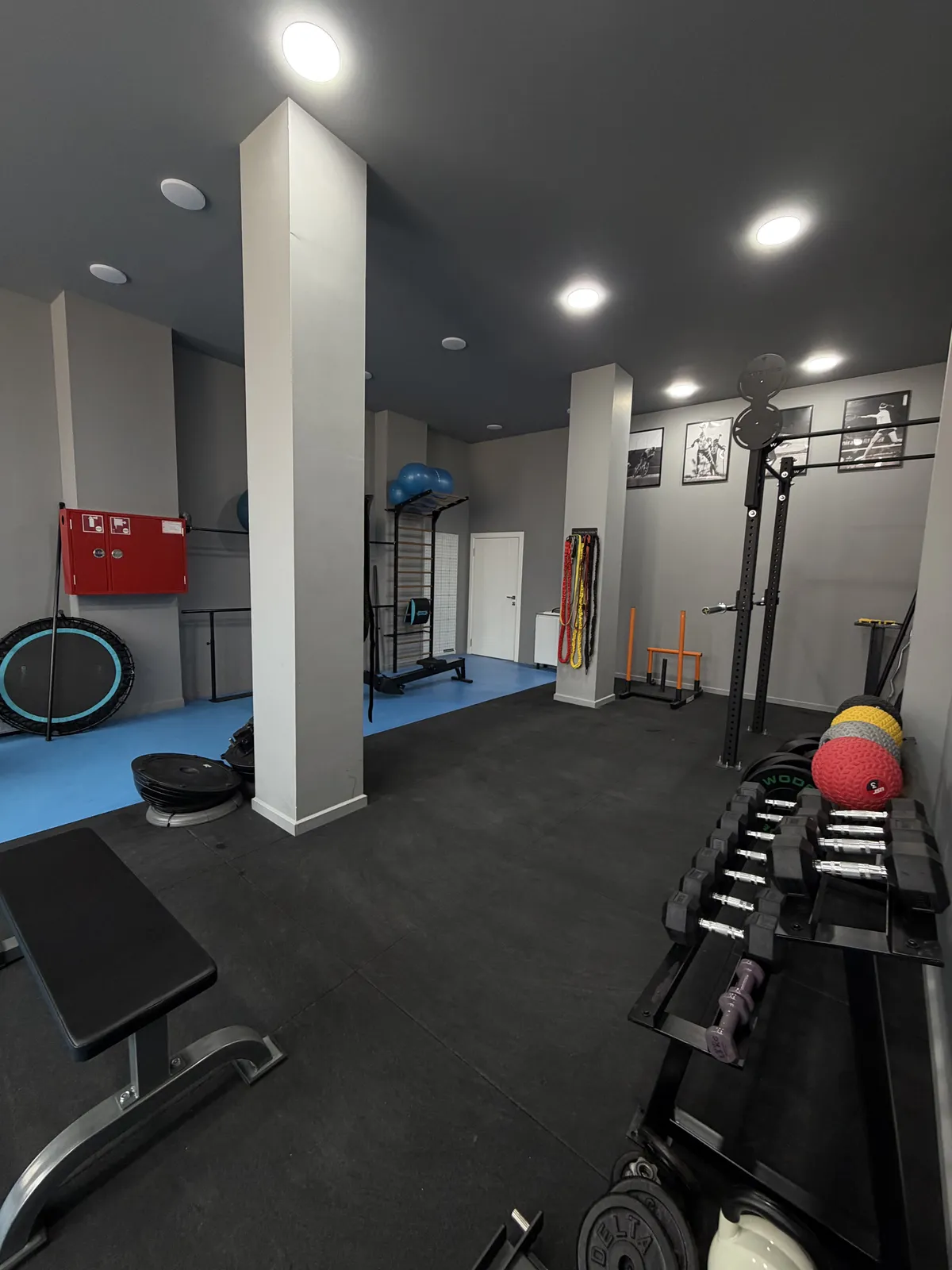
  • Kliniğin egzersiz salonunda dambıl takımı ve denge ekipmanları

    Sport and Strength

    Why Strength Training Matters at Every Age

    Muscle mass falls by 3–8% per decade after the age of 30. Strength training is the only intervention that halts that loss — and it concerns everyone, not just athletes.

    18 July 2026 · 2 min read

Book an appointment for ACL Injury

The appointment form does not ask for health information; details are discussed by phone.

Book an appointment