Skip to content
Fzt. Kemran HafızFizyoterapi & Rehabilitasyon

Neck (Cervical) Disc Herniation Treatment

Desk work and long hours on a phone have made neck herniation and loss of the neck's natural curve far more common. Fzt. Kemran Hafız works on cervical problems along two lines: bringing pain under control and re-educating posture.

About your physiotherapist

  • 5.0 · 21 Google reviews
  • Physiotherapy and Rehabilitation graduate, Karabük University (2020)
  • Clinical experience at Romatem Physical Therapy and Rehabilitation Hospital and Karabük Training and Research Hospital
  • One-to-one rehabilitation in Bursa Nilüfer since 2021
  • Education and experience
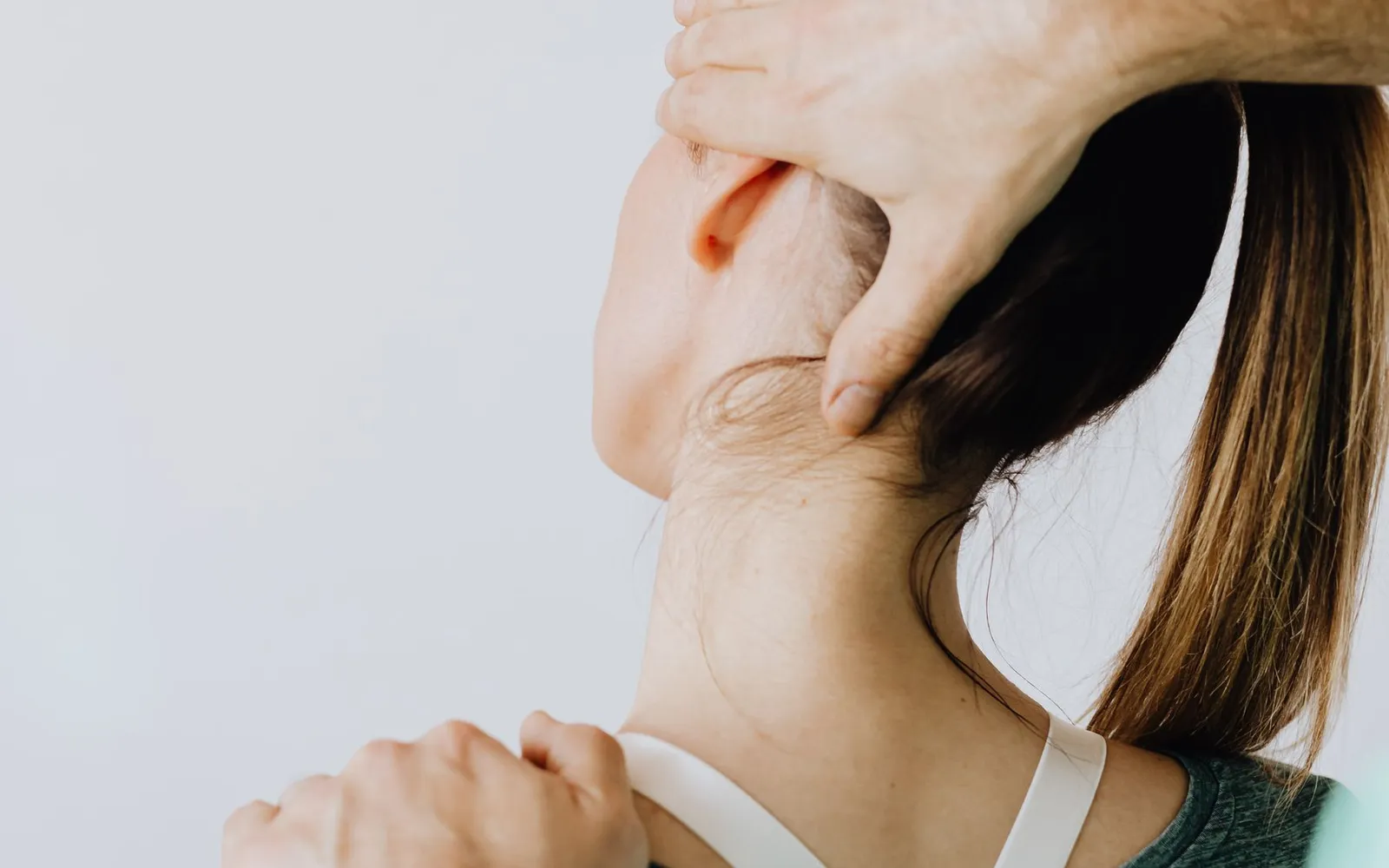
A manual therapy technique applied to the neck

When is it needed?

  • Pain spreading into the arm, elbow or fingers
  • Numbness in the arm or hand, reduced grip strength
  • Dizziness or a disturbed sense of balance
  • Loss of hand dexterity (buttoning, gripping)
  • Headache starting at the base of the skull, often recurring
  • Clear difficulty turning the neck in certain directions

What we do

  • Strength, reflex and sensory examination of the arm and hand muscles
  • Identifying which cervical level a sign originates from
  • Balance and position-sense work
  • Neural mobilisation exercises that gently glide the nerve
  • Graded, measurable strengthening of the deep neck muscles
  • Neurological re-assessment at regular intervals

Neck Herniation in Bursa Nilüfer

Fzt. Kemran Hafız provides one-to-one care for neck herniation at the clinic in Bursa Nilüfer — in Fethiye Mahallesi, on Kelebek Sokak, at a central point of Nilüfer, opposite the Fethiye covered market.

It is a short trip by car or public transport from İhsaniye, Odunluk, Balat, Özlüce, Ataevler, 23 Nisan and the surrounding areas. Every session is one-to-one, assessment-based and tailored to you.

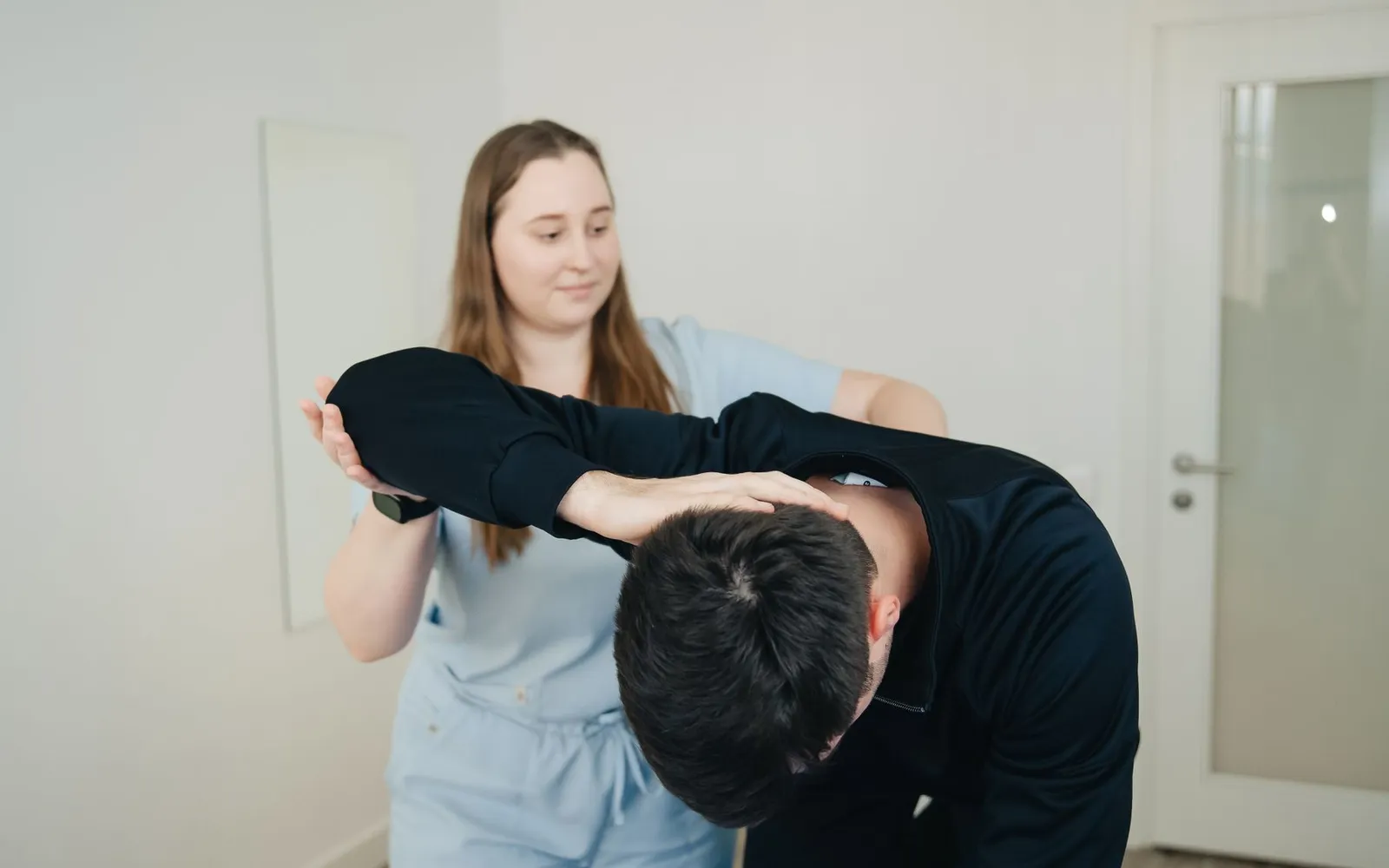
If dizziness accompanies numbness shooting into the arm

Numbness spreading into the arm and reduced grip strength point to the nerve root being affected. The less well-known sign is dizziness: the deep muscles of the neck tell the nervous system where the head is in space, and when that information is disrupted, balance complaints can appear.

Fzt. Kemran Hafız uses a neurological exam to determine which level an arm sign is coming from; if dizziness is present, the programme includes work aimed at that too. Where there is a clear loss of hand dexterity or progressing numbness, a physician assessment is arranged first.

Which level is the arm sign coming from?

In a neck herniation, symptoms spreading into the arm follow a different pattern depending on the level affected. The C6 root typically shows numbness in the thumb and index finger with reduced wrist-flexion strength. C7 typically shows numbness in the middle finger and back of the hand, with weakness straightening the arm (triceps). The C8 root brings numbness on the little-finger side and thinning of the small hand muscles.

This distinction is made by examination, not guesswork; it determines which muscle to strengthen and how progress will be tracked.

Is the dizziness coming from the neck?

Known as cervicogenic dizziness, this pattern arises when the position information the neck's muscles and joints send to the brain is disrupted. Unlike inner-ear dizziness, it is usually triggered by neck movement and eases together with neck treatment.

This distinction matters because a dizziness whose source is misjudged delays the right treatment. Fzt. Kemran Hafız examines whether it is neck-related as part of the assessment.

Surgery or physiotherapy?

Most neck herniations with an arm sign are also managed without surgery; what decides the path is whether the sign is progressing.

AspectPhysiotherapy (non-surgical)Surgery
Who it is forA stable or slowly improving neurological signRapidly progressing weakness, gait instability
GoalRestore lost strength and balanceSurgically relieve pressure on the nerve/spinal cord
Follow-upRegular neurological re-assessmentSurgery followed by rehabilitation again
Who decidesWith physiotherapy and neurology/PMR assessmentNeurosurgeon/spine surgeon or orthopaedic physician
The decision is individual; this table is a general framework.

How is progress measured?

In a neck herniation with an arm sign, progress is tracked regularly across three areas.

MeasureWhat is tracked
Muscle strengthWrist/elbow/hand muscle strength according to the level affected
BalanceSingle-leg stance and eyes-closed balance tests
SensationChange at the boundary of the numb area

When to see a doctor without delay

Progressing weakness in the arm, a clear loss of hand dexterity, gait instability, or symptoms spreading into the legs require urgent assessment. If Fzt. Kemran Hafız finds such a sign during examination, the physician referral is made without delay.

5.0 · 21 Google reviews

Book a one-to-one assessment for neck herniation

Fzt. Kemran Hafız · Bursa Nilüfer. Share your complaint; we plan the process together after the assessment.

Frequently asked questions

Is my dizziness caused by the neck herniation?

Dizziness triggered by neck movement and eased by neck treatment is usually neck-related; the exact distinction is made through assessment, and inner-ear causes must also be ruled out.

I've lost dexterity in my hand — how urgent is that?

A newly started or rapidly progressing loss of dexterity should be assessed without delay; long-standing mild signs can start with a physiotherapy assessment.

Why are balance exercises part of a neck herniation programme?

The neck muscles relay the head's position information to the brain; when that is disrupted, balance can be affected. Balance work aims to rebuild that connection.

How do you know which level is affected?

Through strength, reflex and sensory examination; the distribution of numbness and weakness shows which cervical nerve root is affected.

Do I need a check-up once the neurological sign has resolved?

Yes — regular re-assessment at intervals is recommended to confirm the gain is lasting and to keep up a programme that prevents recurrence.

Further reading

Independent, authoritative health sources. For information only; not a substitute for medical advice.

Other treatments

  • Stiff Neck

    For a neck that suddenly locks: fast relief in the acute phase, then work aimed at preventing recurrence.

  • Vertigo (Dizziness)

    After a physician's diagnosis, a programme that aims to restore balance in vertigo and dizziness through vestibular rehabilitation and positional exercises.

  • Straight Neck

    Assessment that reads the X-ray finding correctly, plus exercise targeting the deep neck muscles.

Articles on this topic

Book an appointment for Neck Herniation

The appointment form does not ask for health information; details are discussed by phone.

Book an appointment