
Why Does Rehabilitation After Surgery Matter So Much?
Fzt. Kemran Hafız · 21 July 2026 · 2 min read · Last updated:
Fzt. Kemran Hafız · 21 July 2026 · 2 min read · Last updated:
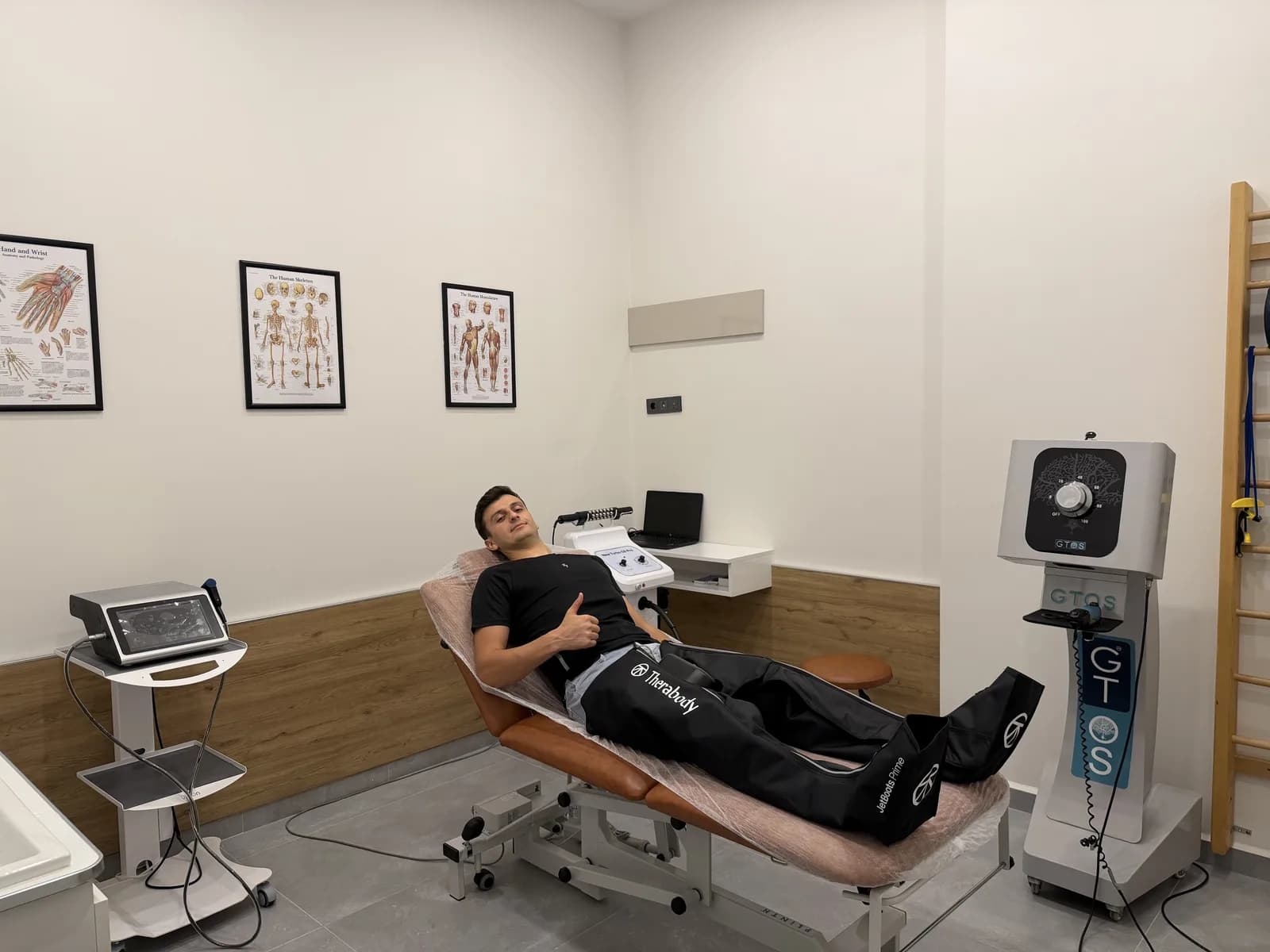
A successful operation is only half of a good outcome. The other half is decided by the rehabilitation done in the weeks that follow.
After shoulder, knee, hip or spinal surgery the question patients ask most often is "when will I be like I was before?" The answer lies largely not with the surgeon but with what is done in the weeks that follow.
An operation corrects the structural issue: a tear is repaired, a joint is replaced, pressure is relieved. But the muscles that went unused during the painful weeks beforehand have weakened, joint movement has become restricted, and the movement pattern has changed. None of that resolves on its own.
1. Controlling swelling and pain. Swelling directly suppresses muscle activation. Strength work is inefficient until it is under control.
2. Protecting range of motion. Movement lost in the first weeks after surgery is far harder to regain later. This is especially true for the knee and shoulder.
3. Restoring muscle activation. Muscles tend to "forget" after surgery; early, light activation work prevents that.
Rehabilitation follows the loading timetable set by the surgeon. That timetable is based on the biology of tissue healing: a repaired tendon or ligament needs time to reach a given strength. Push too early and the repair is at risk; wait too long and the loss of strength and movement becomes permanent.
The right approach is to set measurable criteria at every stage: you move on when a given range of motion is reached — not when a date on the calendar arrives.
Assuming that pain going away means healing is complete. Pain usually returns to normal before strength does. Going back to previous activities before muscle strength and control reach an adequate level is the single most common cause of re-injury.
For that reason the decision to return to sport or heavy work is not based on "I feel fine" but on measurement: the strength difference between sides, balance tests and functional tests.
For most orthopaedic operations, rehabilitation starts within the first days. Every week of delay increases the loss that has to be regained later.
Fzt. Kemran Hafız runs the post-operative period on a measurement basis and in line with your surgeon's protocol. Please bring your operation report and any loading instructions your surgeon has given you to the assessment.
Neurological Rehabilitation
Not all physiotherapy is the same. For conditions arising from the nervous system, neurological physiotherapy differs from orthopaedic physiotherapy in aim and method.
9 October 2026 · 2 min read
Neurological Rehabilitation
The most common question: “How long will it take?” The honest answer depends on the condition. The stages of neurological rehabilitation and realistic expectations.
7 October 2026 · 2 min read
Neurological Rehabilitation
In a neurological condition, the right physiotherapist calls for experience and method beyond the general criteria. What to look for when choosing in Nilüfer.
5 October 2026 · 2 min read
Graded, measurement-based rehabilitation for joint problems and the period after orthopaedic surgery.
Strength-focused rehabilitation for meniscus and ligament injuries, cartilage wear and the period after surgery.
The full ACL pathway: preparation before surgery through to a measured, test-based return to sport.