
Is Straightening of the Neck Curve Dangerous?
Fzt. Kemran Hafız · 24 June 2026 · 2 min read · Last updated:
Fzt. Kemran Hafız · 24 June 2026 · 2 min read · Last updated:
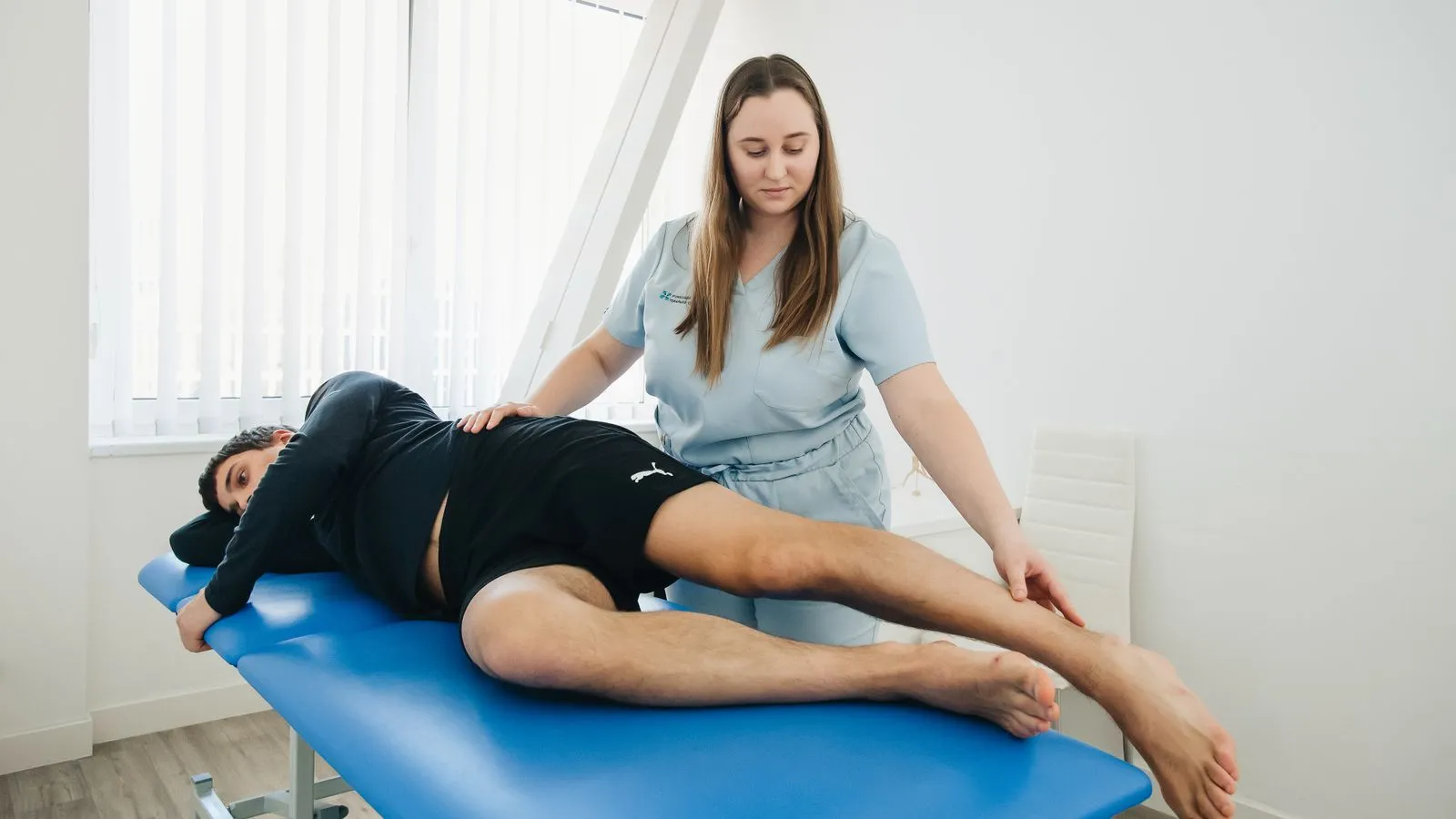
Seeing "loss of cervical lordosis" on a report frightens most people. It is not a disease — it is a finding.
Most people who read "straightening of the cervical lordosis" on an X-ray or MRI report assume they have something serious. In the clinic, this sentence produces more unnecessary worry than almost any other.
Seen from the side, the neck forms a gentle forward curve called the lordosis. When that curve reduces or flattens, the report calls it straightening.
The important point: straightening is a finding, not a disease. It is common in healthy people with no symptoms at all. Position during the scan, muscle spasm on the day, even guarding because of pain can all show up as straightening on an image.
In most neck pain, the problem is not in the image but in the load. The head weighs around 5 kilograms. Every 2.5 centimetres it drifts forward markedly increases the load the neck muscles must carry. A head reaching toward a screen keeps those muscles contracted all day.
So the real question is not "is my neck straight" but "can my neck carry the load it has to carry".
In some people the curve is partly regained, in others it is not. But here is the real news: symptoms settling does not depend on the curve returning. Once the muscles reach the endurance to carry the load, pain settles even if the image does not change.
In the painful stage, manual therapy and — where appropriate — electrotherapy bring the complaint to a manageable level. Then comes the essential part: endurance work for the deep neck muscles, scapular control and desk adjustments. The home programme is kept short and doable; ten focused minutes a day beats one long weekly session.
It may help briefly in the acute stage but is not a long-term solution. Prolonged use weakens the neck muscles and creates dependence. The decision belongs to your doctor.
Fzt. Kemran Hafız builds neck programmes around the load-bearing capacity of the neck rather than the image.
Read on: If the report mentions a herniation alongside the straightening, how assessment proceeds is on the cervical disc herniation page.
Neurological Rehabilitation
Not all physiotherapy is the same. For conditions arising from the nervous system, neurological physiotherapy differs from orthopaedic physiotherapy in aim and method.
9 October 2026 · 2 min read
Neurological Rehabilitation
The most common question: “How long will it take?” The honest answer depends on the condition. The stages of neurological rehabilitation and realistic expectations.
7 October 2026 · 2 min read
Neurological Rehabilitation
In a neurological condition, the right physiotherapist calls for experience and method beyond the general criteria. What to look for when choosing in Nilüfer.
5 October 2026 · 2 min read
Assessment that reads the X-ray finding correctly, plus exercise targeting the deep neck muscles.
A programme focused on posture and the deep neck muscles for pain spreading into the neck, shoulder and arm.
For a neck that suddenly locks: fast relief in the acute phase, then work aimed at preventing recurrence.