
Knee Pain When Running: Causes and Solutions
Fzt. Kemran Hafız · 9 July 2026 · 2 min read · Last updated:
Fzt. Kemran Hafız · 9 July 2026 · 2 min read · Last updated:
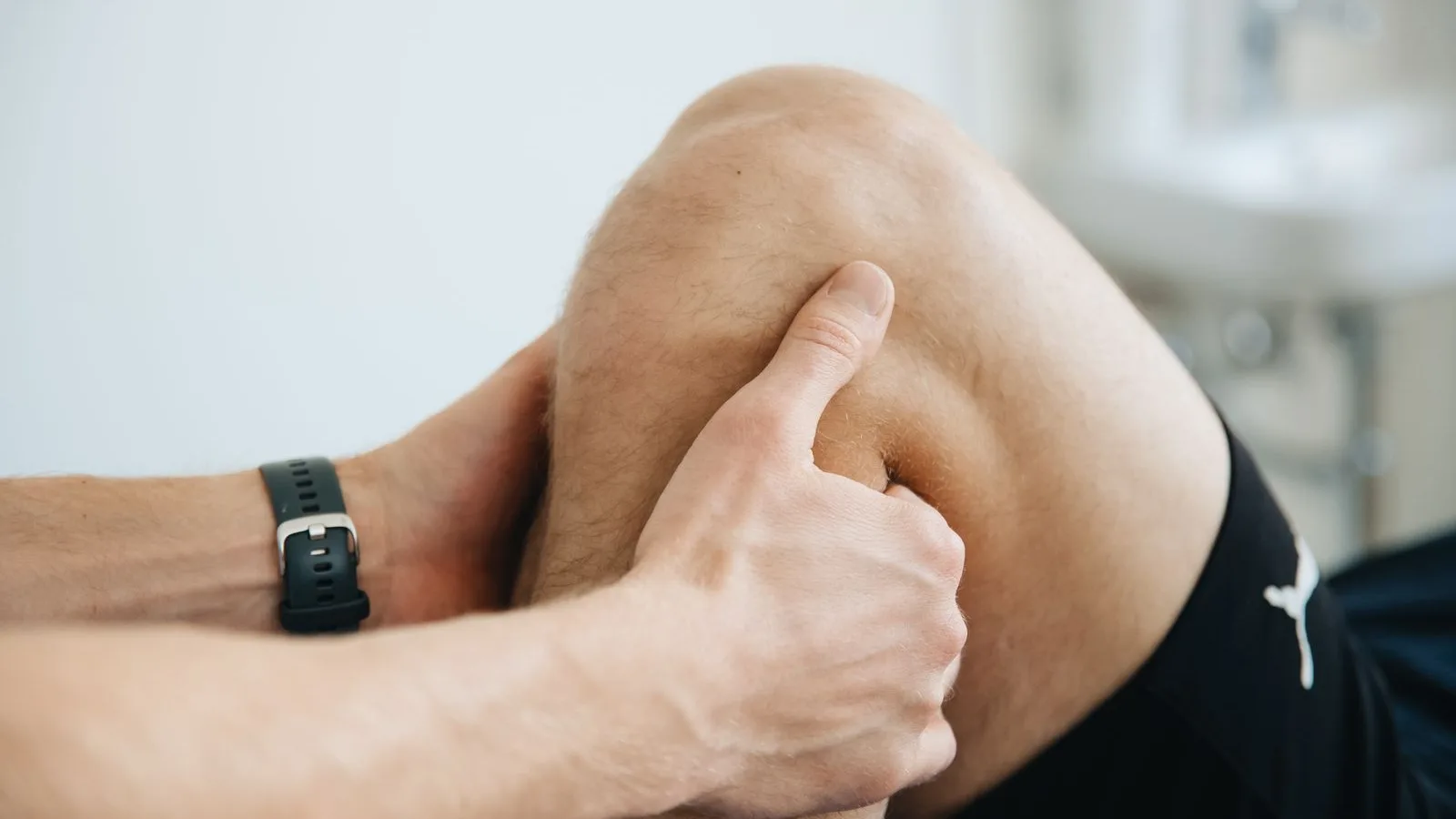
In runners the source of knee pain is often not the knee. Hip strength, step rate and weekly mileage shape the picture.
The most common complaint among people taking up running is pain at the front of the knee that becomes more noticeable as distance increases. This picture, commonly called runner's knee, usually comes not from damage within the knee itself but from how load is distributed across it.
Running is a repeated series of single-leg hops. If the muscles that stabilise the hip from the side do not work adequately at the moment the foot lands, the pelvis drops, the thigh rotates inward and the kneecap moves off its intended track. The pain is felt at the knee, but its cause is above it.
That is why hip abductor and external rotator strength sits at the centre of the programme.
Most running injuries are linked to a sudden rise in weekly distance or pace. Tissue can adapt, but it has to be given time.
The widely accepted approach is not to increase weekly distance by more than 10%. After a long break the starting point is well below where you left off, not at it.
Increasing step rate by around 5% (shorter, more frequent steps at the same speed) measurably reduces the load on the knee joint. It is a simple but effective adjustment and does not require overhauling running technique.
Footwear is one variable in the picture but not decisive on its own. Changing shoes without correcting strength and load management usually brings only temporary relief.
Usually not. In most cases distance and pace are reduced temporarily, walking intervals are added and a strength programme is introduced. Stopping completely means meeting the same problem again on return, with a less prepared body.
For knee pain in runners, Fzt. Kemran Hafız measures hip and trunk strength, analyses walking and running, and builds the programme on those findings. You can book an assessment.
Neurological Rehabilitation
Not all physiotherapy is the same. For conditions arising from the nervous system, neurological physiotherapy differs from orthopaedic physiotherapy in aim and method.
9 October 2026 · 2 min read
Neurological Rehabilitation
The most common question: “How long will it take?” The honest answer depends on the condition. The stages of neurological rehabilitation and realistic expectations.
7 October 2026 · 2 min read
Neurological Rehabilitation
In a neurological condition, the right physiotherapist calls for experience and method beyond the general criteria. What to look for when choosing in Nilüfer.
5 October 2026 · 2 min read
An exercise-based programme aimed at reducing pain and increasing walking capacity in cartilage wear.
Strength-focused rehabilitation for meniscus and ligament injuries, cartilage wear and the period after surgery.
The full ACL pathway: preparation before surgery through to a measured, test-based return to sport.