
What Is ESWT (Shockwave Therapy) and Who Is It For?
Fzt. Kemran Hafız · 6 September 2026 · 3 min read · Last updated:
Fzt. Kemran Hafız · 6 September 2026 · 3 min read · Last updated:
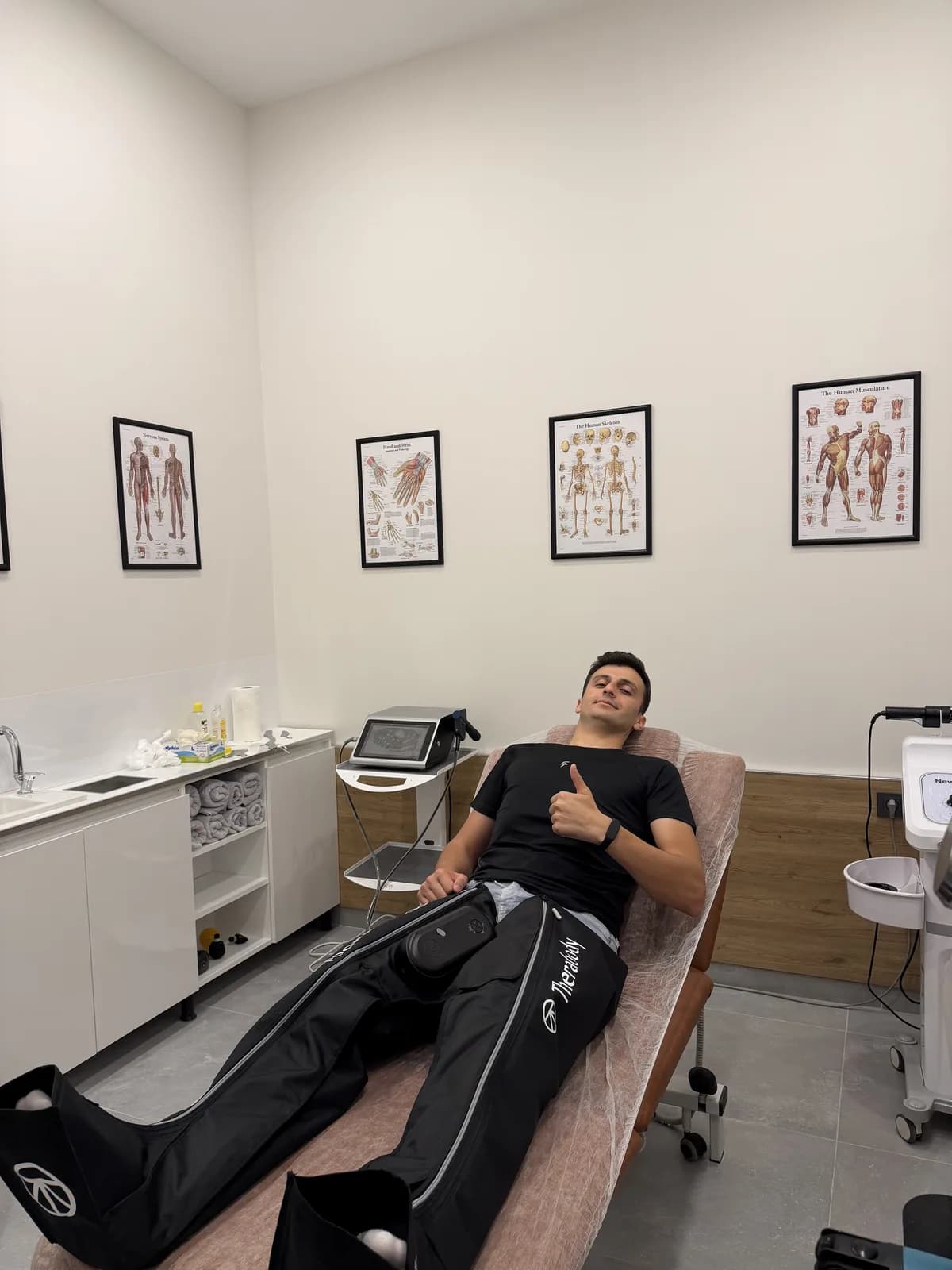
ESWT is a non-surgical, needle-free method that stimulates healing in stubborn tendon and ligament problems. How it works, who it is for, and why it is combined with exercise.
ESWT — extracorporeal shockwave therapy — is a non-surgical, needle-free method that stimulates healing in tissue using pressure (sound) waves delivered from outside the body. It is mostly used for chronic tendon and ligament problems that have not settled despite exercise and other treatments. It makes sense together with an exercise programme, not on its own.
The device sends short, high-energy pressure waves to the painful area. They create a controlled stimulus in the tissue; the aim is to restart a stalled healing process, increase local blood flow and reduce the pain signal. It does not "break" tissue; it supports it towards healing.
| Condition | Area |
|---|---|
| Plantar fasciitis / heel spur pain | Heel and sole |
| Tennis and golfer's elbow | Outer and inner elbow |
| Achilles tendon problems | Back of the heel |
| Calcific tendinitis | Shoulder |
| Patellar tendon pain | Front of the knee |
| Greater trochanteric pain | Side of the hip |
What they share: they are tendon or ligament problems that have lasted at least a few months. Suitability is decided by assessment.
A session usually lasts 10–20 minutes and needs no anaesthetic. Some discomfort may be felt depending on the area; the energy level is set to what you can tolerate. Most protocols use one session a week, 3–5 sessions. The effect appears gradually over the following weeks, not immediately.
ESWT opens a window: pain eases and the tissue moves towards healing. If that window is not filled with exercise that builds the tendon's load capacity, the problem can return. So the programme combines ESWT sessions, gradual tendon loading and daily load management.
These are always asked about during assessment.
ESWT shockwave therapy in Bursa first checks whether the complaint really comes from a tendon or ligament: if the pain is from a nerve, the joint or another cause, ESWT may not be suitable. If it is, sessions are added to the exercise programme and progress is tracked with pain and function measures. See also heel spur for heel pain, tennis elbow for the elbow and shoulder pain for the shoulder.
Does ESWT hurt? Some discomfort may be felt during treatment; the energy level is kept tolerable. Mild tenderness for a day or two afterwards is possible.
What should I avoid after ESWT? In the first days after treatment, activities that heavily strain the area are best avoided; the exercise programme continues at the dose set by the physiotherapist.
Are the results permanent? Combined with exercise, many people get long-lasting relief; but if loading habits do not change, the problem can return.
Fzt. Kemran Hafız uses ESWT in Bursa Nilüfer for stubborn tendon and ligament complaints, after assessment and together with an exercise programme.
Neurological Rehabilitation
Not all physiotherapy is the same. For conditions arising from the nervous system, neurological physiotherapy differs from orthopaedic physiotherapy in aim and method.
9 October 2026 · 2 min read
Neurological Rehabilitation
The most common question: “How long will it take?” The honest answer depends on the condition. The stages of neurological rehabilitation and realistic expectations.
7 October 2026 · 2 min read
Neurological Rehabilitation
In a neurological condition, the right physiotherapist calls for experience and method beyond the general criteria. What to look for when choosing in Nilüfer.
5 October 2026 · 2 min read
Shock wave therapy for chronic tendon and heel complaints, used as part of the programme.
For heel pain that bites on the first step of the morning: shockwave, load management and a graded strengthening programme.
For pain on the outer elbow that flares with gripping: a graded tendon-loading programme that rebuilds grip strength.